About biliary cancer
The gallbladder and bile ducts are part of your digestive system and work together to help you digest food. Biliary cancer happens when abnormal cells in the gallbladder or bile ducts grow out of control.
Biliary cancer may also be called gallbladder cancer, bile duct cancer or cholangiocarcinoma.
Most biliary cancers (about 90–95%) are adenocarcinomas. Other rare types include squamous cell carcinomas, sarcomas and lymphomas.
The exact cause of biliary cancer is unknown. But some things can increase the risk of developing biliary cancer.
There is no population-wide screening program for biliary cancer in Australia.
The gallbladder and bile ducts are part of your digestive system and work together to help you digest food. They are called the biliary system.
The gallbladder is a small pear-shaped organ that sits under the liver on the right side of your body. It stores a fluid called bile.
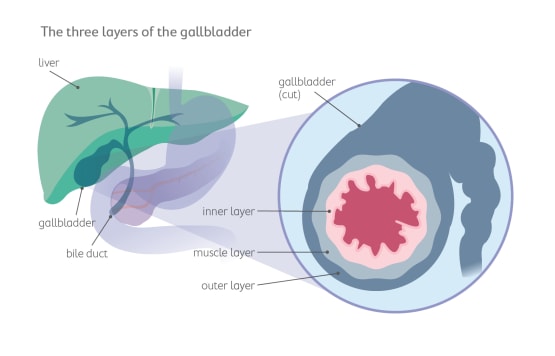
Bile ducts are tubes that carry bile. There are bile ducts inside the liver (called intrahepatic bile ducts) and outside the liver (called extrahepatic bile ducts).
Bile is a yellow-green fluid made by the liver. It helps your body break down and absorb fats from the food you eat.
Here's how the biliary system works:
• Bile is made in the liver.
• Bile travels through bile ducts to the gallbladder, where it is stored until it is needed.
• When you eat, the gallbladder releases bile through the common bile duct into the first part of the small intestine (called the duodenum).
• Bile helps digest fats in the food.
The bile ducts join together like branches of a tree. Small ducts inside the liver join to form the right and left hepatic ducts. These then join to form the common hepatic duct.
The gallbladder is connected by the cystic duct, which joins with the common hepatic duct to form the common bile duct. The common bile duct passes through the pancreas and empties into the duodenum.
The biliary system sits close to other important organs including the liver, pancreas, stomach and intestines.
Biliary cancer happens when abnormal cells in the gallbladder or bile ducts grow out of control forming a tumour. Biliary cancer may also be called gallbladder cancer, bile duct cancer or cholangiocarcinoma.
There are two main types of biliary cancer:
- Gallbladder cancer starts in the gallbladder. Most gallbladder cancers are adenocarcinomas, which start in the cells that line the inside of the gallbladder.
- Bile duct cancer (also called cholangiocarcinoma) starts in the bile ducts. Bile duct cancer can happen:
- inside the liver (intrahepatic cholangiocarcinoma)
- outside the liver near where the bile ducts exit the liver (perihilar cholangiocarcinoma, also called a Klatskin tumour)
- in the lower part of the bile duct near the small intestine (distal cholangiocarcinoma).
Most biliary cancers (about 90–95%) are adenocarcinomas. Other rare types include squamous cell carcinomas, sarcomas and lymphomas.
The exact cause of biliary cancer is unknown. But some things can increase the risk of developing biliary cancer. These are known as risk factors.
Risk factors for biliary cancer include:
- being over 65 years old
- being male
- having primary sclerosing cholangitis (a disease that causes inflammation and scarring of the bile ducts)
- having chronic liver disease, such as cirrhosis, hepatitis B or hepatitis C
- being overweight or obese
- having diabetes
- smoking tobacco
- drinking alcohol frequently
- having certain gallbladder and bile duct problems, such as:
- gallstones
- gallbladder polyps
- a hardened (calcified) gallbladder
- choledochal cysts (abnormal bile duct cysts)
- inflammatory bowel disease
- being exposed to certain chemicals, such as asbestos
- family history. If close family members (parents, brothers, sisters or children) have had biliary cancer, your risk may be slightly higher, although the increase in risk is small
- having certain genetic conditions, such as Lynch syndrome
- being from certain parts of the world, such as East Asia or South America.
Some of these risk factors you cannot change, such as your age or family history. But there are some things you can do to help lower your risk.
There is no guaranteed way to prevent biliary cancer. But you may be able to lower your risk by:
- maintaining a healthy weight through balanced eating and regular exercise
- quitting smoking
- limiting alcohol consumption
- eating a healthy diet with plenty of fruits, vegetables and whole grains
- managing chronic conditions like hepatitis, liver disease or inflammatory bowel disease with your doctor's help.
There is no population-wide screening program for biliary cancer in Australia.
People who are at higher risk may be offered closer monitoring. This might include people who have:
- primary sclerosing cholangitis
- long-term inflammation of the gallbladder
- gallbladder polyps (growths) that are 6–10mm in size.
For these people, doctors may recommend regular ultrasound scans to check for any changes. People with gallbladder polyps larger than 10mm may be offered surgery to remove the gallbladder.
If you are worried about your risk of biliary cancer, speak to your doctor. They can help you understand your risk and discuss if any monitoring is right for you.
Want to talk?
Speak with a specialist cancer nurse, dietitian or counsellor, whether that's understanding a diagnosis, managing day-to-day, tips on managing your diet or just needing someone who understands. Free support for anyone impacted by upper GI cancers, Monday to Friday, 9am to 5pm.