About oesophageal cancer
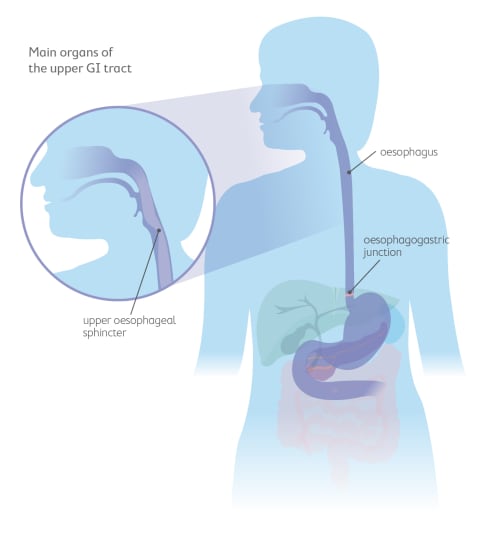
The oesophagus is a muscular tube that carries food and liquids from your throat to your stomach. Oesophageal cancer happens when abnormal cells in the oesophagus or oesophagogastric junction (where the oesophagus meets the stomach) grow out of control.
The oesophagus is sometimes known as the 'food pipe' or 'gullet'.
The function of the oesophagus is to transport food and fluid from the mouth to the stomach after being swallowed.
There is no guaranteed way to prevent oesophageal cancer.
Oesophageal cancers are divided into two main groups, depending on the type of cell that the cancer grows from.
The oesophagus forms part of the upper gastrointestinal (GI) tract in your digestive system. The function of the oesophagus is to transport food and fluid from the mouth to the stomach after being swallowed.
The oesophagus is the tube that starts at the back of the mouth and ends in the stomach. It lies behind the windpipe (trachea) and in front of the spine. The oesophagus is sometimes known as the 'food pipe' or 'gullet'. It is about 25 centimetres long.
The oesophagus has muscles that squeeze and expand to move food down to the stomach. This motion is called peristalsis. No absorption of nutrients takes place in the oesophagus.
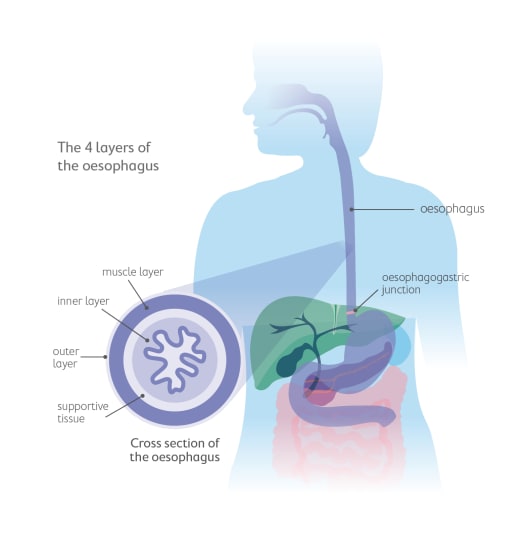
The oesophagus has 4 layers. These are the:
- inner layer, known as the mucosa – this layer is in contact with food
- submucosa – this is a layer of connective tissue that produces mucus. Mucus helps the oesophagus stay moist
- muscle layer, called the muscularis – this layer pushes food down into the stomach
- outer layer, known as the adventitia – this layer attaches the oesophagus to nearby parts of the body so that it doesn't move around.
The oesophagogastric junction is where the oesophagus meets the stomach. This part of the oesophagus is important because it controls the flow of food into the stomach. It also stops the stomach contents from backflowing into the oesophagus.
The oesophagogastric junction has a muscle called a sphincter. This muscle helps prevent stomach acids – which are needed for digesting food – from going up into the oesophagus.
Oesophageal cancer occurs when abnormal cells in the oesophagus or oesophagogastric junction grow out of control.
Oesophageal cancers are divided into two main groups, depending on the type of cell that the cancer grows from:
- Adenocarcinoma (the most common type of oesophageal cancer) starts in the cells that produce and release mucus and other fluids. Adenocarcinomas are most often in the lower part of the oesophagus, near the stomach.
- Squamous cell carcinoma starts in the flat cells lining the oesophagus. It is more common in the upper and middle parts of the oesophagus.
Other, less common types of tumours can develop in the oesophagus. These include small cell carcinomas, lymphomas, neuroendocrine tumours and gastrointestinal stromal tumours (GISTs).
These rare types are not covered in detail here and may require different treatment approaches. If you have been diagnosed with a rare type of oesophageal cancer, speak with your specialist about your specific condition.
There is no guaranteed way to prevent oesophageal cancer. But you may lower your risk by:
- quitting smoking
- limiting alcohol
- eating a healthy, balanced diet with plenty of fruits and vegetables
- managing chronic acid reflux with your doctor's help
There is no population-wide screening program for oesophageal cancer in Australia. However, if you have been diagnosed with Barrett's oesophagus or have other significant risk factors, your doctor may recommend regular check ups using a procedure called an endoscopy.
This allows doctors to check for abnormal changes in the oesophagus before cancer develops or while it is still at an early, more treatable stage.
Want to talk?
Speak with a specialist cancer nurse, dietitian or counsellor, whether that's understanding a diagnosis, managing day-to-day, tips on managing your diet or just needing someone who understands. Free support for anyone impacted by upper GI cancers, Monday to Friday, 9am to 5pm.