About pancreatic cancer
The pancreas is a large gland that sits behind your stomach. Pancreatic cancer happens when abnormal cells in the pancreas grow out of control.
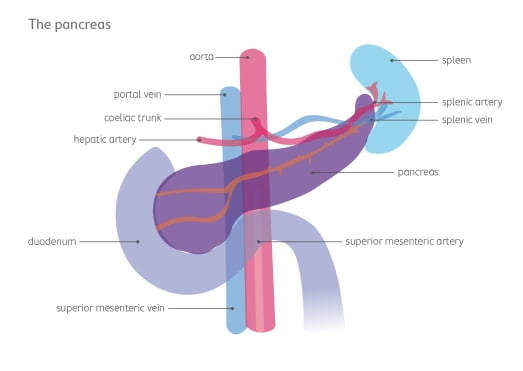
The pancreas sits close to many important organs and blood vessels.
The pancreas is a large gland about 15cm long that sits behind the stomach. It is often described as having a head, body and tail.
Any changes to the pancreas, including those caused by pancreatic cancer and its treatment, can result in problems with digestion and/or blood sugar control.
The exact cause of pancreatic cancer is unknown. But some things can increase the risk of developing pancreatic cancer.
The pancreas is a large gland about 15cm long that sits behind the stomach. It is often described as having a head, body and tail.
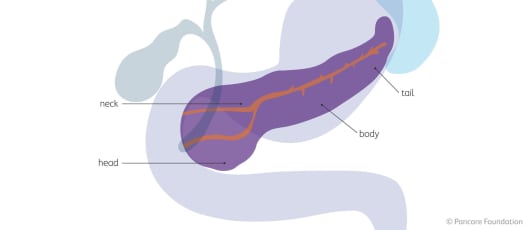
It has two main jobs in the body:
- It produces enzymes that help you to digest and absorb food.
- It produces hormones, including insulin and glucagon, which help to control your blood sugar levels.
Any changes to the pancreas, including those caused by pancreatic cancer and its treatment, can result in problems with digestion and/or blood sugar control.
The pancreas sits close to many important organs and blood vessels.
- A small tube called the pancreatic duct carries digestive juices from the pancreas into the first part of the small intestine, called the duodenum.
- Another tube, the common bile duct, brings bile from the liver and also empties into the duodenum through the head of the pancreas.
- Large blood vessels that supply the liver, intestines, kidneys and the lower body also run near the pancreas.
Pancreatic cancer happens when abnormal cells in the pancreas grow out of control forming a tumour. Pancreatic cancer tumours can grow in any part of the pancreas, including the head, body or tail.
There are two main types of pancreatic cancer, named after the type of cell the cancer starts in:
- exocrine tumours start in exocrine cells. Most (95%) pancreatic cancers are exocrine tumours. The most common type of exocrine tumour is called a pancreatic ductal adenocarcinoma (PDAC).
- endocrine tumours (also called pancreatic neuroendocrine tumours or pNETs) start in the hormone-making cells of the pancreas and account for only 5% of all pancreatic cancers.
The exact cause of pancreatic cancer is unknown. But some things can increase the risk of developing pancreatic cancer. These are known as risk factors.
Risk factors for pancreatic cancer include:
- being over 65 years old
- being male
- smoking tobacco
- frequent alcohol use
- being overweight or obese
- having diabetes (especially type 2, or new diabetes in older adults)
- long-term inflammation of the pancreas (chronic pancreatitis)
- family history or inherited genetic conditions
Other possible risks include eating lots of processed or red meat, some chemical exposures at work, and liver disease.
There is no guaranteed way to prevent pancreatic cancer. But you may lower your risk by:
- quitting smoking
- limiting alcohol
- eating a healthy, balanced diet
- staying active and keeping a healthy weight
- managing diabetes with your doctor’s help.
There is no population-wide screening program for pancreatic cancer in Australia. People with a strong family history or certain genetic risks may be offered closer monitoring, such as MRI or endoscopic ultrasound. If you are worried about your risk, speak to your doctor.
Want to talk?
Speak with a specialist cancer nurse, dietitian or counsellor, whether that's understanding a diagnosis, managing day-to-day, tips on managing your diet or just needing someone who understands. Free support for anyone impacted by upper GI cancers, Monday to Friday, 9am to 5pm.