About stomach cancer
Stomach cancer happens when abnormal cells in any part of the stomach grow out of control. Whether you've just been diagnosed, you're caring for someone, or you're looking for clear information, we're here to help you find your next step.
The stomach is a hollow, muscular sac that forms part of the upper gastrointestinal (GI) tract.
The stomach's main job is to store and break down food and fluid after you swallow.
Stomach cancer may also be called gastric cancer.
The exact cause of stomach cancer is unknown. But some things can increase the risk of developing stomach cancer.
The stomach is a hollow, muscular sac that forms part of the upper gastrointestinal (GI) tract. It sits between the oesophagus (food pipe) at one end and the small intestine at the other.
The stomach's main job is to store and break down food and fluid after you swallow. It does this by:
- producing acid and enzymes that help digest food
- using muscular contractions to churn food into a semifluid mixture called chyme
- slowly releasing this mixture into the small intestine for further digestion and absorption.
The stomach is divided into five regions:
- the cardia connects to the oesophagus
- the fundus sits at the top
- the body is the main central part
- the antrum is the lower section
- the pylorus connects to the small intestine.
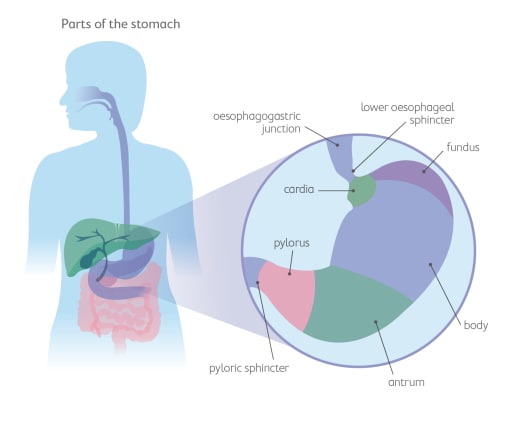
At each end of the stomach are ring-shaped muscles called sphincters. These control the flow of food and fluids in and out of the stomach.
- The lower oesophageal sphincter (also called the cardiac sphincter) sits between the oesophagus and stomach. It opens to let food in and closes to stop stomach acid flowing back up.
- The pyloric sphincter sits between the stomach and the first part of the small intestine (the duodenum). It controls the flow of chyme into the intestines.
If the pyloric sphincter is removed or damaged (such as during treatment for stomach cancer), food and fluids can pass too quickly into the duodenum. This can lead to a condition called dumping syndrome and difficulty digesting and absorbing food and nutrients.
Bile reflux can also occur when the pyloric sphincter relaxes at the wrong time, allowing bile (a digestive fluid) to flow back from the duodenum into the stomach.
Stomach cancer happens when abnormal cells in the stomach grow out of control. Stomach cancer may also be called gastric cancer.
Stomach cancers are divided into four main groups, depending on the type of cell the cancer starts in:
- Adenocarcinomas (the most common type of stomach cancer) start in the cells that line the inside of the stomach (the mucosa). Around 90-95% of stomach cancers are adenocarcinomas.
- Gastrointestinal stromal tumours (a rare type of stomach cancer) start in special cells in the wall of the stomach.
- Neuroendocrine tumours start in the cells of the stomach that make hormones.
- Lymphomas are a cancer of the lymph system that is sometimes found in the wall of the stomach.
The exact cause of stomach cancer is unknown. But some things can increase the risk of developing stomach cancer. These are known as risk factors.
Risk factors for stomach cancer include:
- being over 60 years old
- being male
- smoking tobacco
- frequent alcohol use
- eating a lot of processed meat, or salted or pickled foods
- infection with Helicobacter pylori (H. pylori) bacteria. These bacteria can cause stomach ulcers and are linked to stomach cancer
- family history. If close family members have had stomach cancer, your risk may be higher
- previous stomach surgery for other conditions
- certain medical conditions, such as gastric polyps, pernicious anaemia and chronic gastritis
- long-term bile reflux, which can lead to inflammation and ulcers
- having had part of the stomach removed previously (partial gastrectomy)
- being infected with Epstein-Barr virus
- exposure to certain environmental factors, such as asbestos or certain workplace dusts
Other rare hereditary factors that increase the risk include familial adenomatous polyposis, hereditary diffuse gastric cancer, Lynch syndrome and Peutz-Jeghers syndrome.
There is no guaranteed way to prevent stomach cancer. But you may lower your risk by:
- maintaining a healthy weight through balanced eating and regular exercise
- eating a healthy diet with plenty of fruits and vegetables, whole grains and limited processed foods
- quitting smoking
- limiting alcohol consumption
- managing chronic acid reflux or gastritis with your doctor's help
- treating H. pylori infection if detected
- having regular check-ups if you have risk factors.
There is no population-wide screening program for stomach cancer in Australia. People with a strong family history or certain genetic risks may be offered closer monitoring or genetic testing. If you are worried about your risk, speak to your doctor.
Want to talk?
Speak with a specialist cancer nurse, dietitian or counsellor, whether that's understanding a diagnosis, managing day-to-day, tips on managing your diet or just needing someone who understands. Free support for anyone impacted by upper GI cancers, Monday to Friday, 9am to 5pm.